Session 7: Sleep Part 1
The head is the origin place of so many important systems that this body region is the focus of its own session in the Soma series. In this article, we’ll examine how the head and neck are affected by sleep positions. In Part 2, we’ll continue the topic of sleep positions in context with the rest of the body.
Why Do We Use Pillows?
Archeologists have found head rests from as long ago as 7000 BC. These early pillows were used primarily to raise the head off the ground, keeping ears, nose and mouth a little further away from insects. In some cultures, head rests were used to protect elaborate hairstyles or for spiritual reasons symbolizing the importance of the head. These first pillows were made of stone, clay, and wood.
Eventually, some cultures started using softer pillows that were filled with straw, wool, feathers, or herbs. In most instances, pillows were only used by the wealthy, and were used for mixed reasons including comfort, and as a display of wealth, status, and other symbolism. Much of humankind lived entirely without pillows until the Industrial Revolution when mass production changed the availability of all material wealth.
In Western societies, using a pillow under the head at night is now such a standard that most people don’t question it. Many people assume that we need pillows to protect our heads from something—perhaps poor alignment. Almost certainly, it’s no longer about protection from bugs.
Why do you use a pillow?
When did you start using a pillow?
Have you ever wondered if there’s a better kind of pillow than the one you’re using?
Have you tried to find the “best” one?
Do We Need Pillows?
There are two reasons we use pillows today. One is that they feel comfortable. The other is that we’re commonly told we need to support our heads. We’ll discuss comfort and the balance of softness versus firmness in Part 2 of this article. So, the question at hand is: do we need to support our heads when lying down?
When standing, the human head is supported by the spine. There are several natural curves in the spine which make it stronger than if it were simply a vertical line of bone. This allows the rather heavy head to balance at the top of the rest of the body without costing us too much energy to hold it up there. However, the common “forward head posture--” the tendency to bring the head forward of the spine--creates exponentially more work for the muscles of the neck and back. It’s the same feeling as if you were to hold a bowling ball in your outstretched hand versus holding the bowling ball close to your body. One is a lot more work than the other. So, to support the head well while standing, you need a spine with natural curves that can balance the head close to your central axis.
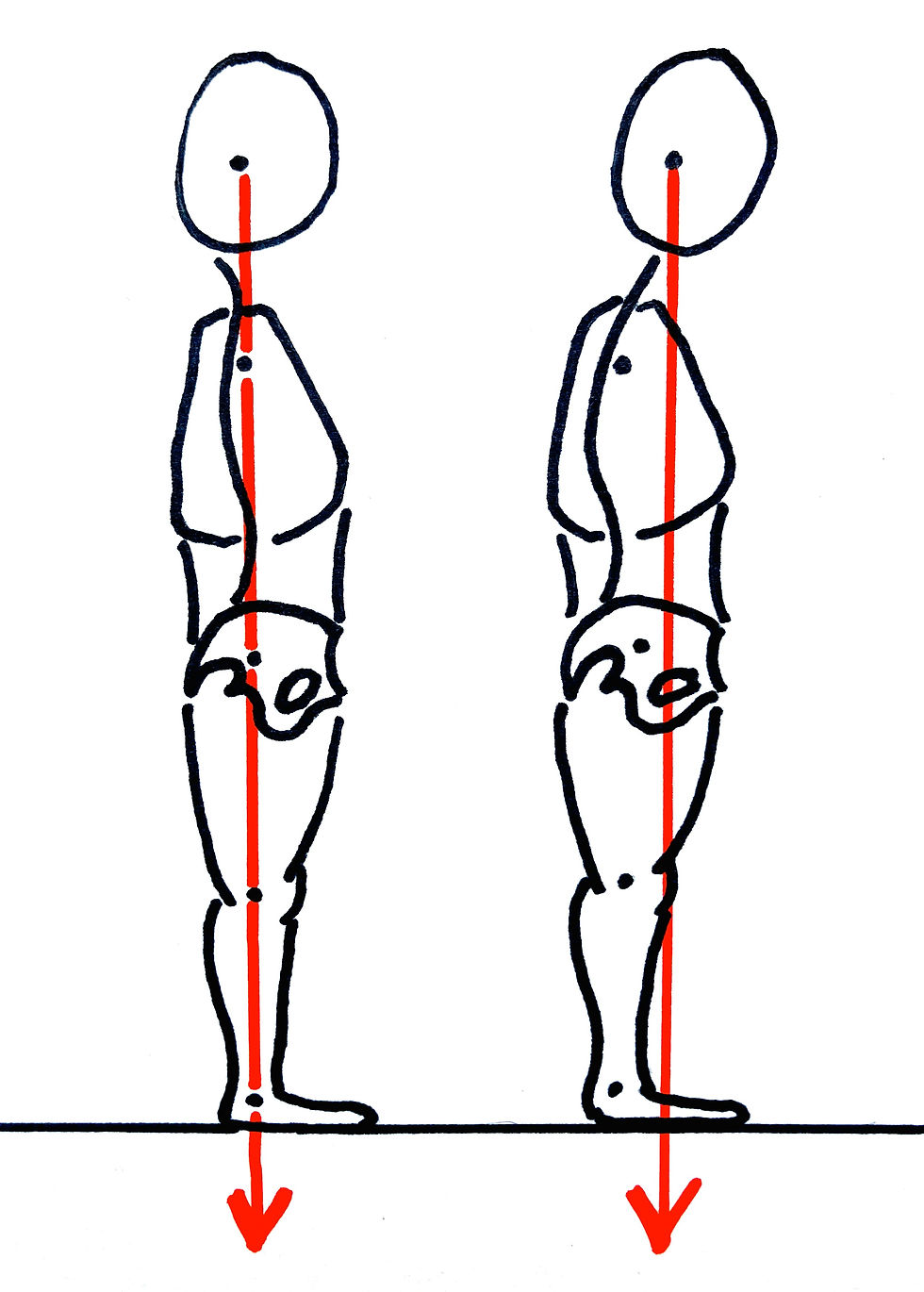
When lying down, your spine doesn’t need to hold your head up. The job of supporting you goes to whatever you’re lying on. If your back is resting on one surface, and your head is resting on another surface that is slightly, or significantly, higher, you may be supporting yourself in a forward head posture, possibly all night long.

Although it is ideal to avoid spending a lot of time in a forward head position, some of us may have no choice as the vertebrae and fascia around the neck and upper back have solidified into that shape over the years. This doesn’t mean this tissue is stuck like this permanently (you are so much more malleable than you probably realize), but it might mean you can’t force your skeleton into a neutral alignment in this instant. In this case, you will want to support your head higher than the rest of your body, for the time being.
Our necks are just one of many places in our bodies that have a natural curve to them. The arches of the feet add strength to our foundation. The arch of our low back adds stability to our upright torso. An arch is a very strong architectural shape. When you see a bridge or a doorway with an arch in it, you don’t feel the need to fill in the gap below, unless it’s crumbling apart! Similarly, our feet, lumbar spines, and cervical spines, and all the arches in our body don’t need support unless they are injured.

When you are injured, it is totally appropriate to be given crutches, a wheelchair, a sling, or other supports. What would not be appropriate is for your doctor to give you crutches and tell you to rely on them from now on instead of doing exercises to slowly regain strength in your body so it can heal properly. Therefore, if you need a pillow to support your head now, it doesn’t necessarily mean you need to use a pillow for the rest of your life. Depending on how else you support your head (what activities, stretches, and self-care you do to free up this region), your needs may change.
When the neck and head are aligned well with the rest of the body, all the structures that flow through this region are able to function better. For example, the brain relies on blood traveling through the neck to bring nutrients and oxygen and eliminate waste. The nose and mouth rely on smooth passage for air and food. The spinal canal and many important nerves need passage out of the skull and down the spine. Neck and head alignment are a big deal. You can encourage good alignment during the day, but you can also work on it at night. If you want to balance out the time you spend in a forward head posture, you might try out removing or at least reducing the height of your pillow.
How to Go Pillow-Free
If you have slept with a pillow your entire life so far, then changing or removing your pillow is a big lifestyle change. You will experience far greater benefit if you progress into any changes slowly.
Evaluate where you are starting from. What is your history with pillows and sleeping? Do you have any sleep challenges you are dealing with? How sensitive is your neck to sleep positions out of your norm? How does your neck feel if you go camping or stay at a hotel?
Reduce the height of your pillows in small increments. If you sleep with two pillows, try to go down to one. If you sleep with a big pillow, try out using a smaller one. At first, keep your regular pillow nearby so that at any point in the night you can grab it and return to what your neck is used to.
When you’re ready for something a little different, ditch your pillow entirely and get a stack of towels or blankets. The benefit of towels or blankets is that you can stack them as high or low as you want. Put the towels inside a pillow case for softness. When you feel ready to reduce the height of your headrest, just remove a towel or unfold them partway. Just like before, keep an extra layer handy to add back some height if needed.

The process of reducing your pillow might take weeks, months, or years. There are a lot of individual factors. Eventually, you might go down to just one towel, blanket, or sweatshirt under your head. Then you can experiment with having no pillow at all. You might also use your shoulder or arms as a headrest, as is common across many cultures.
Keep having some kind of extra layer nearby, just in case you want it. If you do return to using more of a headrest, you haven’t failed. Continually meet yourself where you are in the moment. Growth and change are often not linear progressions. There will always be times when we want to be a bit softer with ourselves. If you have a headache or cold, having more cushion under your head can be really nice.
Side Sleeping
If you sleep on your side sometimes, you may feel an increased need for a pillow due to the distance between your head and shoulder. If you are in a lot of discomfort side-sleeping without a pillow, it’s a good idea to keep supporting your head. However, you can also play with exact positioning of your shoulder, head, and ribcage. There are many variations of side-sleeping, and there might be one that’s more comfortable for you.

Healthy tissues like to be in many different positions, including being stretched long or scrunched short. If your neck is only slightly uncomfortable side-sleeping with less support, you might treat this as part of your neck mobility work. During the day, you can further support this sleep position by doing stretches and exercise that move your upper body. And if you sleep on your back and belly without any headrest, but grab a small pillow for side sleeping, that’s awesome. You are meeting your body in each moment.
There are so many benefits to healthy neck and head alignment, not least of which is that it feels a lot better. Life is easier to enjoy when we’re not in pain. Using a pillow at night may be reinforcing a hunched-forward shape in your spine and stiffness in your neck and shoulders. Conversely, if you reduce your pillow volume and allow your neck more freedom to move, you can work on improving your alignment while you sleep.
Use these ideas as feels appropriate for you, and please ask me questions if you have them! If you’re ready for more, read on to Part 2.